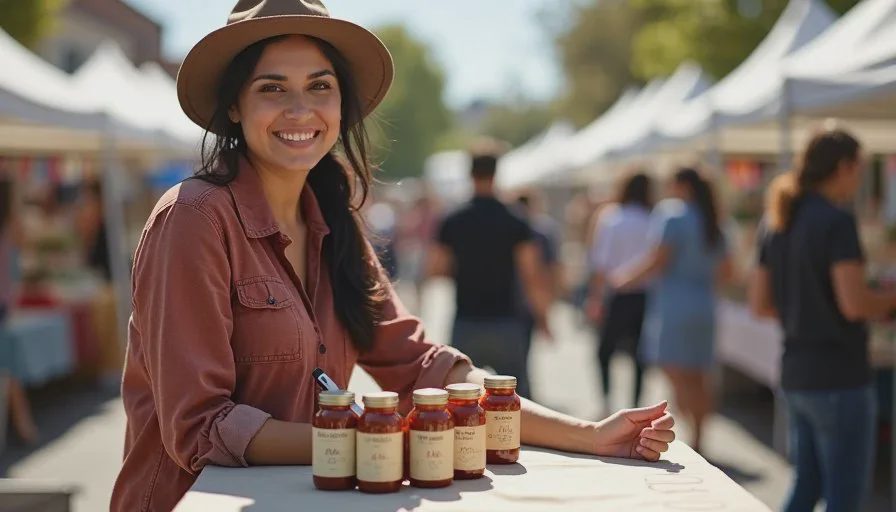
Last Saturday I handed a chunk of my farmers market day to AI, and I want to be precise about what that means. I did not let a chatbot set my prices or talk to customers for me. I used it for the parts of the day that eat time without adding money: label text, sign copy, customer question prep, and the inventory math I usually do on the back of a receipt at 1 p.m. while someone is waiting.
Prompt & Pepper is my barbecue sauce business. Six flavors on a good week, three when I am behind. It fits in the back of my 2012 Subaru Outback and it runs on Saturdays. If you are a one-person operation, AI for farmers market businesses is not about scaling to a warehouse. It is about getting through the day without skipping the parts that make you money.
This is entry four in The AI Test Log. Same rules as always: a real problem, a documented process, honest costs, and a verdict.

The Problem: A Market Day Has Too Many Small Jobs
The List Nobody Sees
A market day is not one task. It is about twenty. Reprint labels because the last batch smeared. Rewrite the price sign because the marker bled. Answer the same four questions forty times. Decide whether to discount the last nine bottles at 1:30 or pack them home. Track what sold so I know what to make on Sunday.
Most of those jobs are small, boring, and impossible to skip. They also cluster at the worst times. I have written a price sign in a parking lot with a Sharpie and a coffee on my knee more than once.
Why I Tried AI Here Specifically
I wanted to know whether AI for small business owners was actually useful on the operational middle layer, the same layer that AI handled reasonably well on my camping trip. Labels and signs are writing tasks. Customer questions are a retrieval task. Inventory is arithmetic. All three should be in range.
The Setup: What I Automated and What I Refused To
The Friday Night Prep
Friday evening I sat at the kitchen table with the laptop and did four things.
First, I asked for three versions of a bottle label blurb for each flavor, under thirty-five words, no health claims, no "world's best" language. Second, I asked for a price sign structure that a person could read from six feet away. Third, I asked for the ten most likely customer questions at a barbecue sauce booth, with short answers. Fourth, I asked for a simple sold-versus-remaining tally format I could fill in with a pen.
What I Did Not Hand Over
I did not let AI set prices. I did not let it write anything about ingredients, allergens, or shelf life, because those come from my own kitchen records and a cottage food permit, not from a model. I did not give it customer names, emails, or my Square account details.
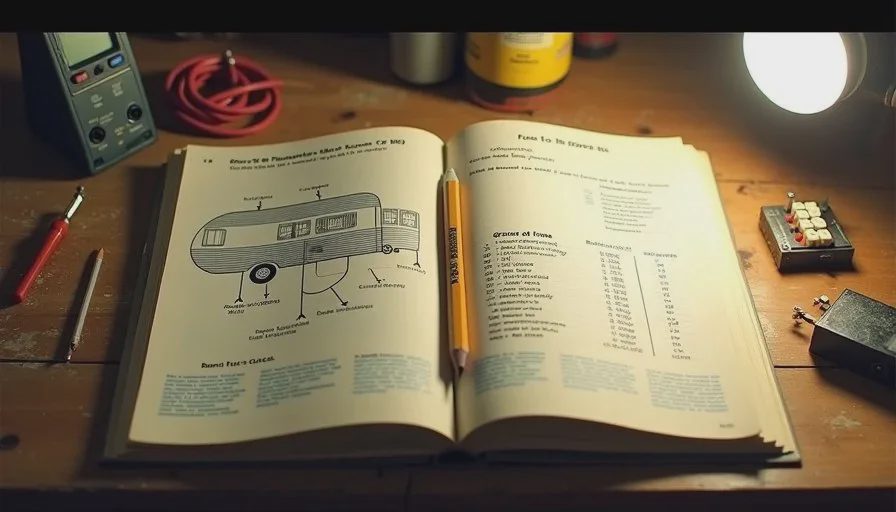
That boundary is not paranoia. It is the same rule I used on the trailer manual test. Anything that carries a legal or safety consequence stays with a human who is accountable for it.
The Tools
One general-purpose assistant, plus a photo of my existing booth setup so it could see what I was working with. No specialty retail tool. No new subscription.
The Test: A Market Day From 5 A.M. to 2 P.M.
5 A.M. — Labels and the Printer
The label blurbs came back fast and were mostly usable. I kept two of the six almost unchanged. One flavor, the green chile sauce, needed three rewrites because the first two versions sounded like a restaurant menu instead of a market table. The fix was giving the assistant an example of how I actually talk to customers: short, warm, specific.
Time saved: maybe twenty minutes. Not a headline number, but at 5 a.m. twenty minutes is real.
8 A.M. — The Sign That Did Not Work
I asked for a price sign structure and got a clean, logical layout. Three tiers, clear headers, tidy columns.
It failed at the booth. The header was too small, the flavor names sat below the prices, and two customers asked me to explain the sign instead of reading it. I flipped it over at 9:15 and hand-wrote a simpler version: flavor on the left, price on the right, big numbers, nothing else.
This is a good example of what AI tools that actually save time can and cannot do. The model gave me a reasonable document. It could not see the sign from six feet away in morning glare with a person walking past.
10 A.M. — Customer Questions
This part worked better than I expected. The question list included the ones I always get: How hot is it? Is it sweet? How long does it keep? Do you ship? Can I use it on chicken? Is it gluten free?
I did not read answers off a screen. What helped was having written them out the night before. Writing a short answer once meant I said it the same way all day instead of rambling. Two questions, about allergens and shelf life, I answered from my own records and ignored the model's draft entirely.
12 P.M. — Inventory Math
I asked for a tally format and got a clean grid. I used it on paper. By 1 p.m. I knew I had nine bottles of the original and four of the hot, which told me to stop discounting the original and hold the price on the hot.
That is a small decision, but it is the kind of decision I usually make badly because I am tired and the line is long. Structure helped more than intelligence did.
What Worked
Product Description Drafts
For AI for product descriptions, the honest answer is: good first drafts, bad final copy. I rewrote about half of what it produced. What it did well was get me past the blank page on Friday night instead of Sunday morning.
Customer Question Prep
Highest return of anything I tested. Writing ten short answers in advance changed how the day felt and probably how I sounded.
A Simple Tally Format
Not clever. Not technical. Genuinely useful. AI for inventory management at my scale is not software. It is a grid and a pencil.
What Failed
The Sign
Covered above. Layout logic on a screen does not survive a market aisle. If I had tested it at home at six feet away, I would have caught it. That is on me, not the model.
Tone Drift in Label Copy
The first label drafts leaned into adjectives I would never use out loud. "Bold, smoky, unforgettable." I do not talk like that at the table. If you feed a model no examples of your own voice, it will default to marketing voice, and customers can feel the difference.
Confident Answers About Rules
I asked a side question about cottage food labeling requirements in Colorado. The answer was structured and sounded authoritative. I checked it against the actual state guidance and it was incomplete. I did not rely on it. Do not use a general assistant as your compliance source, ever.
What Still Needed Human Judgment
Pricing, allergen and shelf-life statements, sampling decisions, and anything involving a customer who looked unhappy. Also the discount call at the end of the day, which is a gut decision about my own cost per jar that no model knows.
I also made the final call on what to cook Sunday. The tally told me what sold. It did not tell me what to make, because it does not know how much of each batch I can afford to produce.
Cost and Time
AI cost: nothing beyond my existing subscription. Friday prep: about fifty minutes. Time saved on labels and question prep: roughly an hour and a half. Time lost to the failed sign and the rewrites: about forty minutes. Net gain on the day: maybe an hour, plus better consistency at the table, which is hard to measure but easy to feel.
Final Verdict
Useful with guardrails.
For prepping words before a busy day, this was worth doing and I will do it again. For layout decisions I can only judge in person, for pricing, and for anything regulatory, it stayed out of the driver's seat. That is the right division of labor for a one-person business. AI for small business customer service works when you write the answers first and say them yourself.
Take it apart first. Then ask AI.

No comments yet — be the first to share a thought.