
Most AI for career change advice assumes you have evenings free, a budget for courses, and a tolerance for sitting through videos. I had none of those things when I left my B2B SaaS job. I had a consulting practice to build, a sauce business to run on Saturdays, a trailer with bad wiring, and about thirty minutes a night before I stopped thinking clearly.
This is the eighth entry in The AI Test Log and the third in Workbench Skills. It is the plan I wish someone had handed me. It is built for someone who works all day, studies after dinner, and needs to know how to use AI as a beginner without turning their life into a second job.
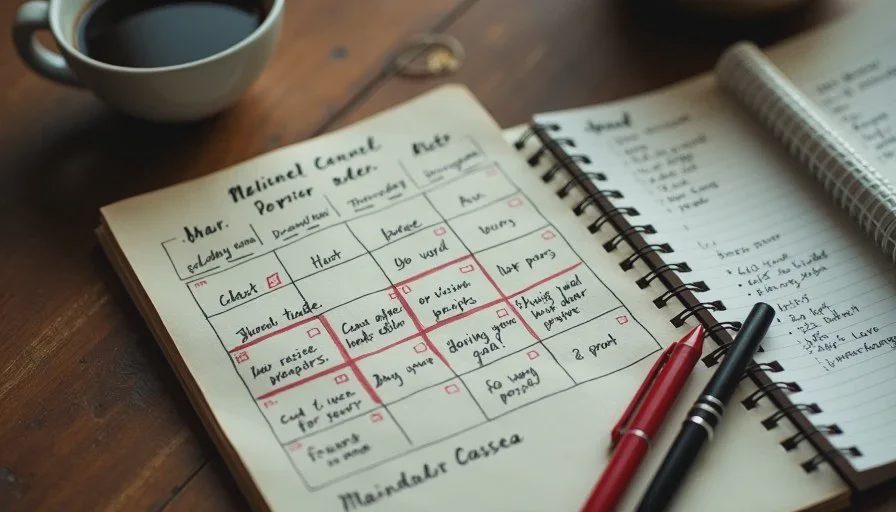
Why a 30-Day Plan Beats an Open-Ended Goal
What 30 Days Actually Gets You
Four weeks does not make you an expert. It gives you something more useful at this stage: a set of habits and one finished piece of work you can point at.
After thirty days of short sessions, you should be able to take a messy input from your own job and turn it into something structured without starting from a blank page. You should know two or three failure patterns well enough to spot them. And you should have a written record of what you tested, which becomes the thing you talk about in an interview.
The Mistake I Made First
My first attempt was a list of eleven tools and a plan to learn all of them. I got through two. The list was the problem. It started with tools instead of tasks, which is the same mistake I made when I tried to build a productivity stack and ended up paying for subscriptions I never opened.
The second attempt started with one question: what do I actually do at work that is slow, repetitive, or hard to explain? That question produced a plan I could finish.
The Rules Before the Plan
Thirty Minutes, Five Days a Week
Not an hour. Thirty minutes. If you plan for an hour and miss it, you feel behind and you quit. Thirty minutes is short enough that you will do it on a bad night, and it is long enough to finish one small task if you wrote down what you were doing the night before.
One Project Per Week, From Your Real Work
Every week ends with one finished thing. Not a certificate. A document, a summary, a workflow, or a comparison you can show someone. Use work you already have to do, so the practice doubles as output.
The Verification Habit Starts in Week One
From day one, you ask where an answer came from. Which parts came from what you provided, and which parts the model inferred. That question is the difference between a skill and a liability, and it needs to be automatic before you use AI on anything that matters.
One Tool, One Second Opinion
Two subscriptions at most. I use one main assistant as a default and a second for checking. Adding a third tool in the first month mostly adds decisions.
Week One — Vocabulary and One Small Task
Days 1–2: Learn the Words by Using Them
Do not read a glossary. Take one paragraph of your own work writing and ask for a plain-language summary. Then ask what the model changed and why. You will pick up terms like context, output, and verification by seeing them applied to your own material.
Days 3–5: Pick One Boring Task
Choose something you do weekly and dislike. Meeting notes, status updates, rewriting an email, summarizing a long document. Run it through the assistant five times across five days and keep the outputs. By Friday you will see the pattern in what works and what does not.
Do not judge the tool yet. Judge your own inputs first. Most weak outputs in week one come from vague requests, not weak models.
Week Two — Reading and Summarizing Your Own Work
Days 8–10: Feed It Real Documents
Take a document from your actual job and ask for three things: a five-line summary, a list of open questions, and a list of anything that looks like it needs a decision. That third list is the valuable one, because it turns reading into action.
Days 11–12: Compare Two Versions
Write your own summary first, then ask for one. Put them side by side. Notice what the model caught that you missed and what it got wrong. This comparison exercise teaches judgment faster than any tutorial, because it is your judgment being tested against an alternative.
Days 13–14: Practice the Sourcing Question
For every factual claim in the output, ask where it came from. Mark each one as from your input or inferred. Keep that marked-up page. It becomes your reference for the rest of the month.
Week Three — Building One Repeatable Workflow
Days 15–17: Write Down Your Steps
Take the task you practiced in week two and write the steps on paper, including what you check and what you never delegate. My five-step version is short: write the problem sentence, ask for structure first, ask where the answer came from, verify outside the chat, write the verdict by hand.
Days 18–19: Test It on a Second Task
A workflow that works for one task is a coincidence. Apply your steps to a different task, ideally one with a factual component you can check. If the steps hold, you have something portable.
Days 20–21: Find the Boundary
Deliberately test something the tool should not handle. Pricing, a rule you can look up, a specification you cannot verify. Watch how confident the wrong answer sounds. Knowing the shape of that failure is more valuable than another success.

Week Four — Show Your Work and Test Your Judgment
Days 22–24: Build One Finished Artifact
Put your thirty days into a single document. What you tested, what you used, what failed, what you would tell someone else. Three to five pages. This is the piece you bring to a conversation with a hiring manager, a client, or a colleague.
Days 25–26: Have Someone Challenge It
Give the artifact to a person who does the work you want to do and ask what is wrong with it. Their questions will show you where your understanding is thin. That gap list is your next thirty days.
Days 27–30: Write Your Own Verdicts
Go back through everything you tested and label each one. Keep it. Useful with guardrails. Good for one-off tasks. Not worth building a workflow around. Delete it and do the work yourself. Learning to say the last two out loud is the part that separates a skill from enthusiasm.
What to Track
Three numbers, kept on paper. Minutes per session. Tasks finished. Times you had to verify something outside the tool. If the third number is zero, you are not paying attention yet. If the first number is climbing toward ninety minutes, you are overbuilding.
Pitfalls I Hit
Chasing Releases Instead of Skills
I spent a week reading announcements and learned nothing transferable. Model updates change the surface. The habits underneath stay.
Building a Stack Too Early
I connected three tools in week two and broke the workflow in week three. Build one workflow manually first. Automate it after it works by hand.
Letting the Plan Grow
My first plan had forty items. Thirty days works because it is small. If you finish early, add depth to one project rather than adding a second project.
Skipping the Writing
The nights I skipped the notebook were the nights I repeated the same mistakes the next day. The paper log is not admin. It is the learning.
What Still Needed Human Judgment
Everything about your own career direction. AI can help you turn a job posting into a study list, and it cannot tell you whether the job fits your life. When I tested this on my own transition, the model produced a tidy skill map. It had no idea that I did not want to go back into a large corporate environment, which was the most important constraint in the whole decision.
Also judgment about time. Only you know whether Tuesday night is a thirty-minute night or a zero-minute night. Honor the zero and continue on Wednesday.
Cost and Time
Two subscriptions, both used weekly. Thirty days at thirty minutes, five days a week, is about seven and a half hours of practice, plus the reading and writing you would do anyway at work. That is a realistic number for someone with a full-time job, and it is enough to produce one artifact you can show.
Final Verdict
Keep it.
This is a plan for people who are tired, employed, and serious. It does not require coding, a course, or a new identity. It requires thirty minutes, a paper log, one real project per week, and the discipline to ask where an answer came from before you use it.
Take it apart first. Then ask AI.


No comments yet — be the first to share a thought.