
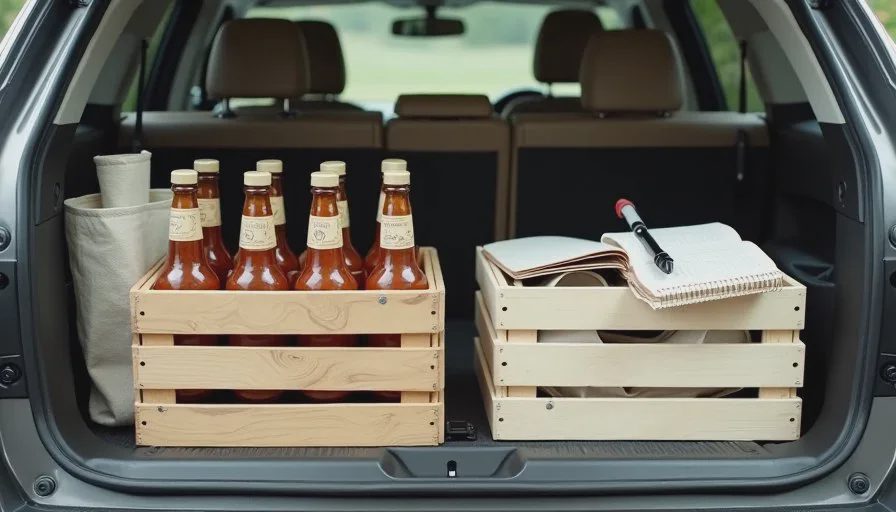
My entire inventory fits in the back of a 2012 Subaru Outback, and I still managed to lose track of it for most of my first season. I would drive home from a market with a rough idea of what sold, guess at what to cook on Wednesday, and then run short on the flavor that actually pays my booth fee. Inventory tracking sounds like a problem for warehouses. It is also the problem that decides whether a one-person market business makes money or just stays busy.
This is the thirteenth entry in The AI Test Log and the third in the Small Money column. When people talk about AI for inventory management, they usually mean forecasting systems and barcode scanners. At my scale, it means a grid, a pencil, and one question I ask an assistant once a week. That is not a downgrade. It is the version that survives a Saturday.
Why Inventory Is the Hardest Small Job
The Math Nobody Teaches
A farmers market business has a strange inventory problem. I produce in batches, sell in units, and cannot restock mid-day. If I bring twelve bottles of the hot sauce and sell out at 10 a.m., I have lost sales for four hours. If I bring eighteen and sell nine, I have tied up money in product and I have to haul it home.
That is a forecasting question, and forecasting is where small businesses bleed quietly.
Why I Did Not Want Software
I looked at inventory apps. Most of them assume a storefront, a barcode, and a consistent daily volume. My business has one table, six flavors, and a volume that swings with the weather. Setting up software for that would have taken longer than the problem deserves, and I would have abandoned it by week three. I know this because I abandoned a productivity stack the same way.
What I Actually Needed
Three things. A way to record what I brought. A way to record what sold. And a way to turn those two numbers into a decision about what to cook next. That is it. No dashboard, no sync, no subscription.
The Paper System I Already Had
The Tally Grid
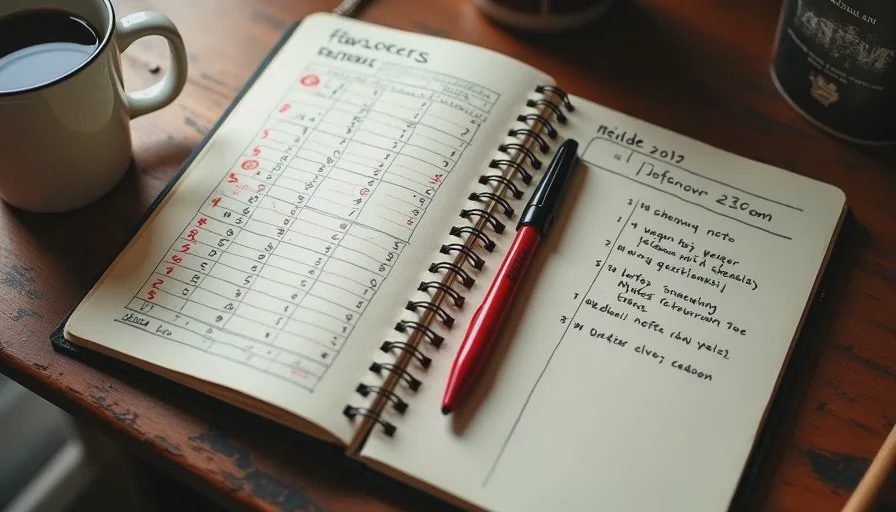
Before AI entered the picture, I used a page with columns. Flavor names down the left side. Three columns across: brought, sold, remaining. I filled it in after every sale with a pencil. At the end of the day, I had the numbers, and I wrote the totals on a second page.
This system worked. It still works. The problem was never the recording. It was the decision I made from the numbers, which I did badly because I was tired and standing in a parking lot.
Where It Broke Down
Two places. First, I did not always bring the tally sheet home, so I lost the raw numbers. Second, when I did have the numbers, I did not turn them into anything. I would look at the page, feel like I remembered the day, and cook based on that feeling. Feelings are a bad forecasting method when your margins are thin.
What AI Actually Does Here
One Weekly Review, Not Continuous Tracking
I do not use AI during the market. I use it once a week, on Sunday evening, with the paper tally in front of me. I type in the brought and sold numbers for each flavor across the last few markets and ask two questions.
First: which flavor has the widest gap between what I bring and what I sell? Second: what pattern shows up across the last four weeks?
That is the entire AI role. Two questions, once a week, about ten minutes.
Why This Works Better Than a Forecast
The model is not predicting demand. It is looking at numbers I already collected and pointing at a pattern I might have missed because I was in the middle of living it.
Two weeks ago it flagged that my medium-heat flavor sold out early in three of the last four markets while my mild flavor consistently came home with six or seven bottles. I had noticed the hot one selling well. I had not noticed the mild one was quietly costing me money every week.
The Decision Stays Mine
The model told me the pattern. I decided what to do with it. I cut the mild batch by a third and added those jars to the medium-heat run. That decision involved my cost per jar, my cooking time, and my storage space, none of which the model knows.
The Format That Works for Me
What I Type In
I keep the entry short. Flavor name, bottles brought, bottles sold, market location, and a one-line note about weather or events. Five fields, four weeks of data. That is enough to show a pattern and short enough that I actually do it.
The weather note matters more than I expected. A rainy market and a sunny market are different businesses, and the numbers look different for reasons that have nothing to do with my sauce.
What I Ask For
Two questions, phrased in plain English. Which flavor has the biggest gap between brought and sold, and what pattern shows up across the last four weeks. I do not ask for a forecast. I do not ask for a suggested production plan. I ask for a read of the numbers I already have.
That distinction keeps the output useful. When I have asked for production plans, I got generic advice about batch sizing that ignored my kitchen.
What I Write Down After
One line in the notebook. The change I am making and why. Then I make it and check the result the following month. That is the whole loop.
What Worked
Spotting the Slow Seller
The mild flavor pattern was real and I had missed it for weeks. Fixing it took one production run and it changed the margin on my market days.
Cutting My Record-Keeping
Because I knew I would review the numbers on Sunday, I got more consistent about keeping the tally sheet. The review gave the recording a purpose. That is a small thing and it is the reason the system lasted.
Keeping the Data on Paper
Nothing to sync, nothing to charge, nothing to break. The paper travels in the same crate as the bottles and it comes home every time now.
What Failed
Asking for a Forecast
My first attempt asked for a predicted demand number for the next market. The output was confident and useless. It did not know about the holiday weekend, the competing festival two towns over, or the fact that I had changed my recipe. Demand forecasting needs context a model cannot see from four rows of numbers.
Typing the Numbers in Wrong
Twice I entered sold numbers that exceeded what I brought. The model did not catch it and neither did I until the pattern looked strange. I now add the two columns by hand before I type anything. Two minutes, catches everything.
Letting the Review Slip
When I skipped two Sundays in a row, the system fell apart for a month. The review is the system. The recording alone does not do anything.
What Still Needed Human Judgment
Every production decision. How much I can physically cook in a Wednesday session. What my storage can hold. Whether a flavor is worth keeping at all even if it sells. Whether a slow week was weather or a real shift.
I also keep the pricing decision and the decision about whether to discount at the end of a day. Those depend on my cost per jar and my read of the crowd, and no model has either.
Cost and Time
AI cost: nothing beyond a subscription I already had. Time spent: about ten minutes on Sunday, plus two minutes checking the math. Time saved: harder to state, because the savings come from better production decisions rather than faster tasks. The mild-flavor correction alone was worth more than the setup time for the whole season.
Final Verdict
Keep it.
For a one-person business with a paper tally, one weekly AI review is a real improvement over guessing. It does not forecast, it does not replace the pencil, and it does not need a subscription of its own. It reads the numbers I already collected and points at the thing I was too close to see.
If you are running something small and you have a page of numbers you never look at twice, that page is the place to start. The tool is the easy part.
Take it apart first. Then ask AI.

No comments yet — be the first to share a thought.