
I started The AI Test Log because I got tired of reading about AI in imaginary futures while my own porch was still broken. That is the short version. The longer version involves a 1974 Shasta trailer named The Debugger, a farmers market booth, a pile of unread receipts, and a slow realization that most practical AI tools for everyday tasks are described by people who have never tested them against a real deadline, a real customer, or a real budget.
This blog is not an AI news site. It is not a list of tools I copied from someone else. It is a field log. Every experiment starts with a problem I actually had, uses tools I actually paid for or tested, and ends with a verdict I would give a friend. Real tests. Real results. No hype.
What I Kept Seeing in AI Content
The Gap Between Demonstration and Real Life
Most AI content shows a clean demo. Someone types a prompt, the tool produces a polished answer, and the video ends. What the video leaves out is what happens next: the wrong assumption in the output, the subscription cost after the free trial, the privacy question you did not think to ask, and the twenty minutes you spent correcting a response that sounded confident and was still wrong.
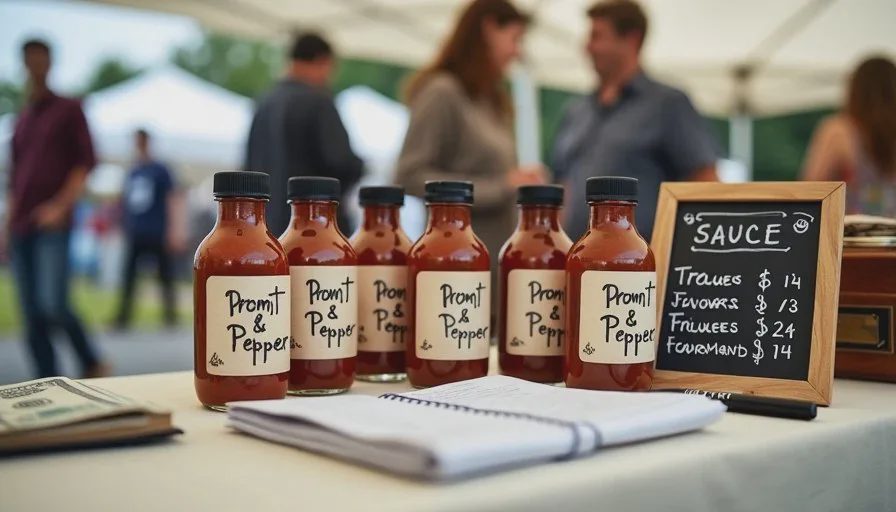
I have used AI while repairing a trailer, planning a road trip with my partner Jordan and our rescue mutt Biscuit, running my barbecue-sauce business Prompt & Pepper, and sorting out my own consulting workflow. In every one of those situations, the tool was useful — but rarely in the way the marketing suggested.
Why "Imaginary Futures" Advice Fails Beginners
If you are exploring AI for a career change, a side business, or just to stop losing receipts, you do not need a lecture about the future of work. You need to know which task to try first, what it costs, how long setup takes, and where the output breaks. That is the information I could not find, so I started writing it down.
The Day That Changed My Approach
A Broken Trailer, a Bad Answer, and a Notebook
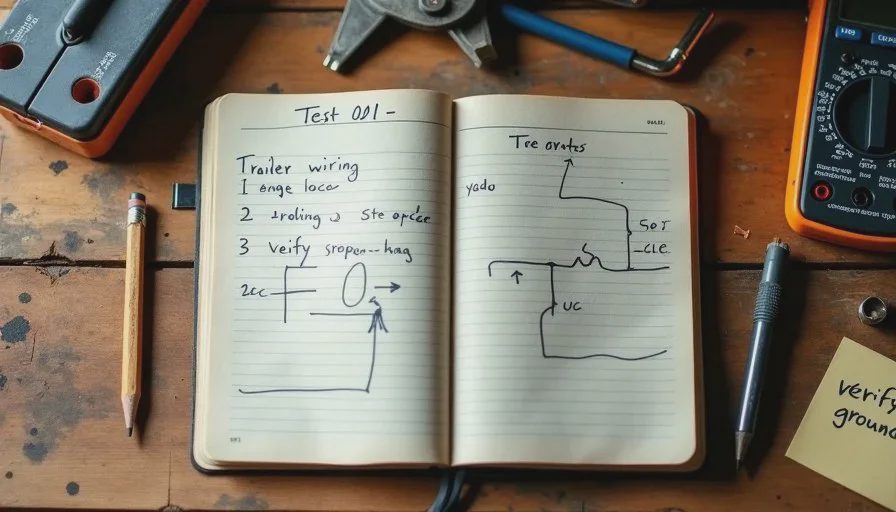
Last spring I was tracing an electrical fault in The Debugger. I asked an AI assistant to help me diagnose it. The answer was structured, confident, and partly useless. It told me to check connections I had already checked and skipped the grounding issue that actually mattered. I only caught the mistake because I had a multimeter and a service manual open beside me.
That night I started a test log. Not because the tool failed, but because the failure was instructive. The AI gave me a reasonable starting checklist. It did not replace my judgment. That distinction is the whole point of this blog.
What That Moment Taught Me About Verification
A good AI answer and a correct AI answer are not the same thing. Beginners often treat fluent output as finished work. I did, at first. Now I treat every response as a draft that has to survive contact with the physical world, a real customer, or a second opinion. If it cannot, it is not finished.
What Testing AI in the Real World Actually Means
My Standard Test Format
Every experiment on this blog follows the same structure:
The problem
The setup
The tools
The test
What worked
What failed
What still needed human judgment
Cost and time
Final verdict
That format keeps me honest. It also makes posts comparable, so you can see patterns instead of one-off wins.
The Verdict Labels I Use
I score every experiment with one of five labels: Keep it, Useful with guardrails, Good for one-off tasks, Not worth building a workflow around, or Delete it and do the work yourself. The last one appears more often than tool companies would like.
What I Will Not Do
I will not promise overnight income. I will not claim AI replaces a licensed professional. I will not recommend a tool I have not meaningfully used. I will not hide subscription costs or setup effort. And I will not treat an AI-generated answer as automatically correct. If a tool only works in a demo, I will say so.
Where I Am Starting
The Problems Already on My Bench
The first experiments cover ground I already walk on: planning a three-day Colorado camping trip for two people and one dog, reading a 1974 Shasta manual with AI assistance, running a farmers market day for Prompt & Pepper, and tracking which AI tools actually saved time versus which ones just felt productive.
Why Small Business Comes First
Small businesses are where AI claims meet reality fastest. When you sell barbecue sauce at a farmers market, you cannot afford a workflow that adds steps without removing work. Either AI helps you write labels, answer customer questions, and track inventory, or it does not. I would rather test that than speculate about enterprise transformation.
What You Can Expect From The AI Test Log
You will get beginner-friendly AI workflow examples, honest cost breakdowns, and clear final recommendations. You will also get the failures. I will show the smudged output, the tool that sounded great and was not, and the moment I had to stop and do the work myself.
If you are changing careers, starting something small, or just trying to use AI as a beginner without becoming a programmer, this log is for you. Take it apart first. Then ask AI.



No comments yet — be the first to share a thought.