
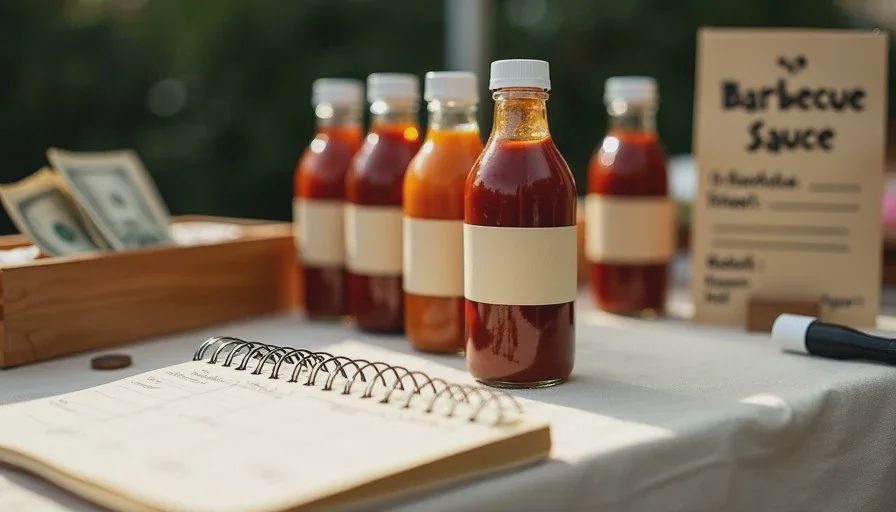
I started Prompt & Pepper with a case of mason jars, a burner, and a folding table. Nobody told me it would be passive. Nobody told me it would be easy. What I got instead was a small business that fits in the back of a 2012 Subaru Outback, pays for itself, and takes about twelve hours a week during market season. If you are looking for AI for side hustles that promises mailbox money, this is the wrong post. If you want the honest version, this is the eleventh entry in The AI Test Log and the first in the Small Money column.
I have been running this sauce business for two years alongside independent consulting work, a trailer restoration, a garden, and a blog. I am not a success story in the way the internet uses that phrase. I am a person with a spreadsheet that shows what I actually make, and I want to show you the parts that do not get covered.
The Passive Income Story and Why It Fails
What the Promise Sounds Like
The promise goes like this. Pick a product. Set up an online store. Let AI write your listings and handle your customer service. Wake up to sales. Repeat.
I have heard this from at least a dozen sources. Some of them were selling courses. Most of them had never run a physical product business, which is the only kind I know.
What Actually Happens
A physical product business has three parts that do not scale down. Production, logistics, and customer contact. Each one takes time. Each one can go wrong in ways a chatbot cannot fix.
Last season I lost two hours on a Saturday because a jar lid did not seal properly and I had to pull six bottles from the table. No model would have caught that. I caught it because I smelled the sauce.
Why the Framing Matters
The passive income framing is not just inaccurate. It is harmful to beginners, because it sets an expectation that leads people to quit when the first month is hard. A tiny business that makes four hundred dollars a month and takes twelve hours a week is a real business. It is not passive, and it does not need to be.
What a Tiny Business Actually Costs
Startup Numbers From My Own Books
My first season cost roughly six hundred dollars to get started. Jars, lids, labels, a case of bottles, a folding table, a canopy, a banner, a permit fee, and the ingredients for my first three batches. I already owned the burner and the pots.
That number is small compared to a storefront and large compared to the version of this story where you start with nothing. Both framings are unhelpful. Starting costs money, and it is possible to start small.
Ongoing Costs
Every market day costs about forty to sixty dollars in ingredients, plus the booth fee, which runs thirty to fifty dollars depending on the market. Labels and jars are a few cents per unit. Gas to and from the market is real. I do not count my own time as a cost, which is a choice, not an accounting method.
What I Do Not Spend Money On
I do not pay for a retail POS system. A cash box and a handwritten tally sheet work at my scale. I do not pay for a website builder because my online orders are handled through a simple form and a spreadsheet. I do not pay for a logo designer because my label is a font, a color, and a handwritten tagline.
Every subscription is a small business owner's worst habit. I have canceled four tools in the last year that I never opened after the first week.
What AI Actually Does in My Business
Label and Product Description Drafts
For AI for product descriptions, the honest answer is that it gets me past the blank page. I write three versions of a short label blurb, pick the best, and rewrite it in my own voice. Half of what I use is mine. The other half is the structure the model gave me.
This is not a huge time saving. It is a small one that happens at the right moment, which is Friday night when I am tired and I still have to print labels.
Customer Question Prep
I wrote ten common questions and short answers before a market day and it changed how the day felt. I answered the same questions with the same words every time instead of improvising while a line formed. That consistency is worth more than the twenty minutes it took to prepare.
Inventory Tracking
AI for inventory management at my scale means a grid and a pencil. I asked a model for a simple tally format and used it for a season. It is not software. It is a page with columns, and it works because I fill it in after every sale.
What I Do Not Use It For
I do not use AI for pricing, allergen statements, or anything about shelf life. Those come from my own kitchen records and the state guidance for cottage food operations. I do not use it for customer service replies that involve a complaint, because tone matters and I want to handle those myself.
The Hours Nobody Counts
A Typical Market Week
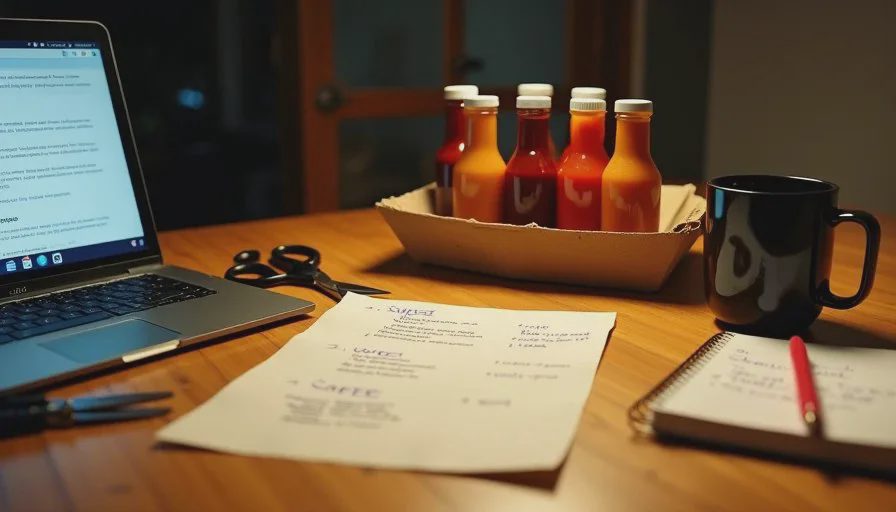
Here is what a market week actually looks like. Monday, I place an ingredient order, about twenty minutes. Wednesday, I cook a batch, which takes three hours including cleanup. Thursday, I label and pack, about ninety minutes. Friday, I print signs and update my tally sheet, about an hour. Saturday, the market itself, six hours including setup, selling, and teardown. Sunday, I restock and clean, about an hour.
That is roughly twelve and a half hours. Some weeks it is more. Some weeks, in the off-season, it is zero.
Why the Number Matters
If you are considering a side business, the hours are the real cost. The money is easier to see and easier to underestimate. I track my hours on a piece of paper taped inside a cupboard door, because if I did not, I would tell you it takes six hours and I would be wrong.
What AI Does Not Reduce
Production, cleanup, driving, and standing at the table. These are the majority of the hours. AI reduces the preparation and the writing. That is real, and it is a smaller share than the marketing suggests.
Three Things I Would Tell a Beginner
Start With One Product
I started with three flavors and I should have started with one. Three flavors tripled my labeling, my inventory tracking, and my ingredient ordering before I knew whether anyone wanted the first one. One product teaches you the whole system with a fraction of the complexity.
Test at a Real Market Before You Build Anything
One Saturday at a real market will teach you more than three months of planning. You will learn what people ask, what they do not buy, and whether you enjoy standing at a table for six hours. That last one matters and it is not on any checklist.
Keep the Books Simple
A notebook, a spreadsheet, and a folder for receipts. That is enough at my scale. I tried a fancier system once and abandoned it in two weeks. Simple books you actually keep beat good books you do not.
What Still Needed Human Judgment
Every pricing decision. What to make and how much. Whether to discount at the end of the day. Whether a customer complaint deserves a refund. Whether a batch tastes right. Whether the business is still worth the twelve hours.
AI can lay out options and structure a decision. It cannot know that I have a consulting project due the same week, or that the sauce I made on Wednesday is slightly off because the peppers were different.
Cost and Time
Startup cost: about six hundred dollars for my first season. Ongoing cost: forty to sixty dollars per market day in ingredients and thirty to fifty in booth fees. Weekly hours: about twelve and a half during the season. AI cost: one subscription I already had. Time saved per week with AI: roughly an hour and a half, mostly on labels and preparation.
Final Verdict
Useful with guardrails.
AI helped me write labels, prepare customer answers, and build a simple tally format. It did not make the business passive, and it did not reduce the physical work. A tiny business is a job that pays for itself and teaches you something. If that is what you want, it is worth doing. If you want income without hours, this is not it, and neither is anything else I have found.
Take it apart first. Then ask AI.



No comments yet — be the first to share a thought.